$7

Digital Audio
$12
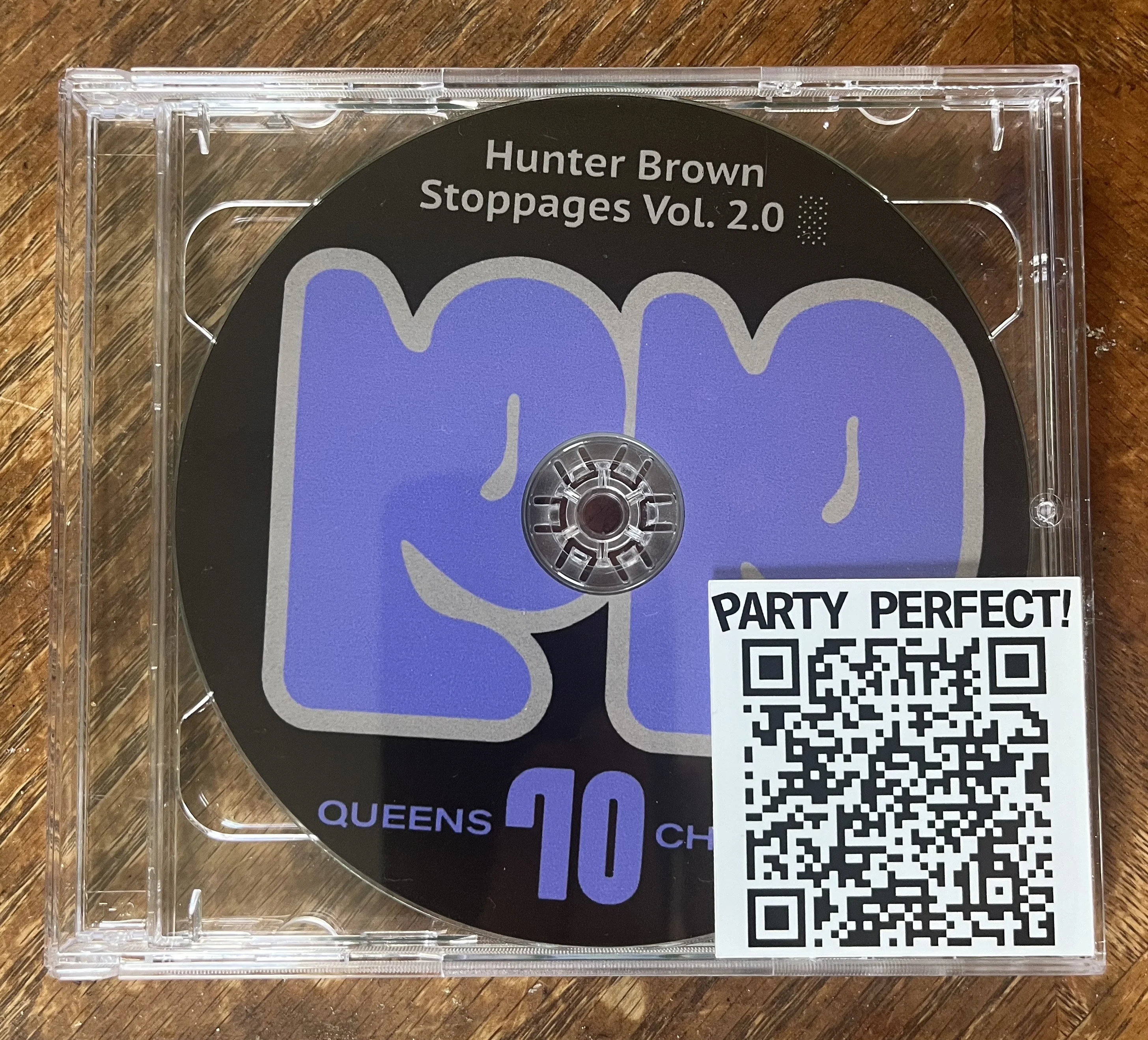
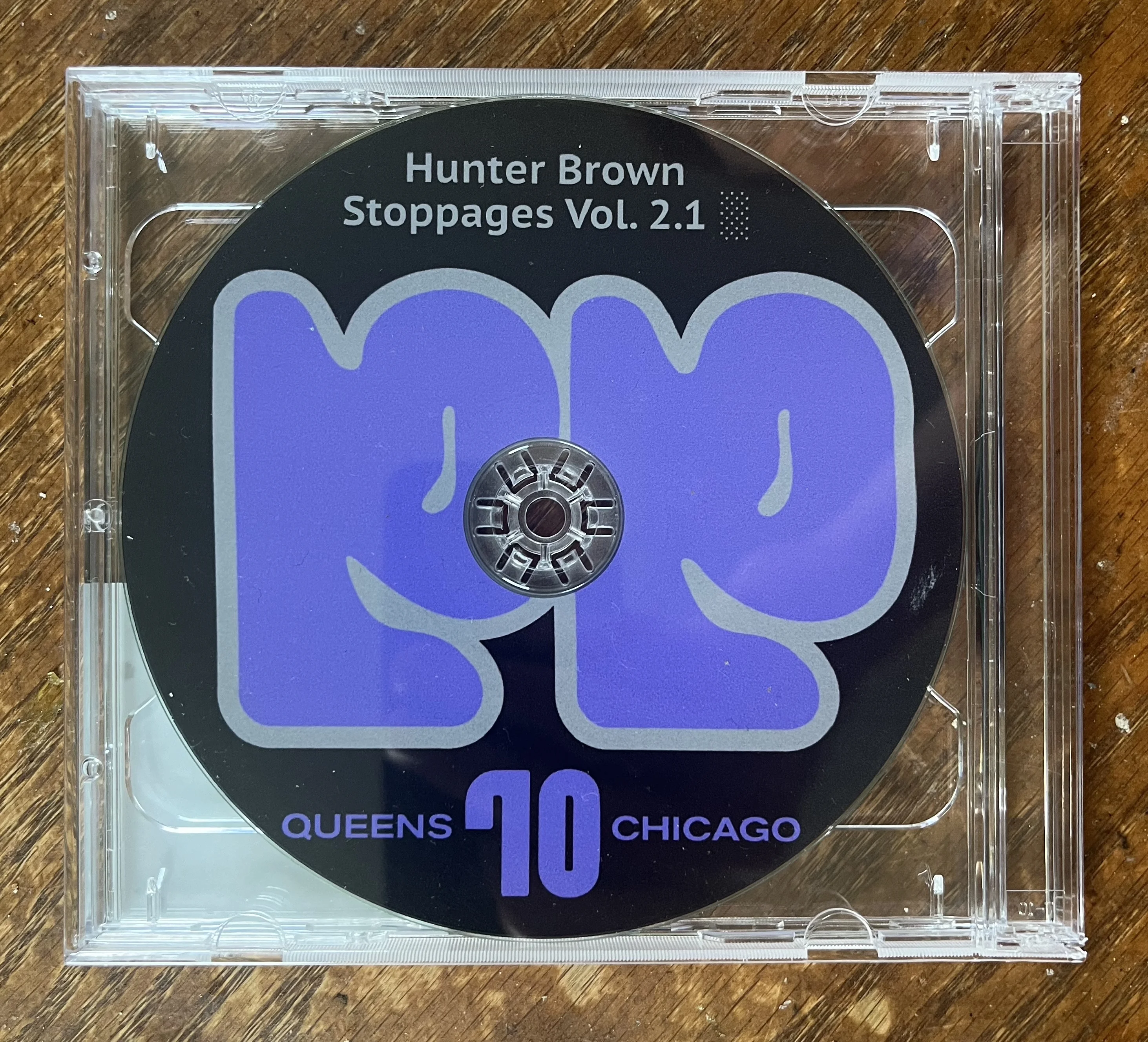
Double Compact Disc
Stoppages Vol. 2 - Hunter Brown
Stoppages Vol. 2 investigates the material nature of digital audio through manipulations of the MP3 codec. Digital audio file formats are representations of sound that
mediate between physical data stored on a hard drive and the acoustic signal perceived by a listener. The MP3 employs perceptual audio coding, an encoding process that
intentionally discards information deemed “perceptually irrelevant” by psychoacoustic models of human hearing. This process alters the audio’s quality as it mediates
between the machinic representation of audio and the listener, reducing file size to facilitate reproduction and distribution.
Embedded within this process is an assumed universal mode of listening and perception where timbral delicacy, Western tonality, and naturality are paramount. For example, Suzanne Vega’s “Tom’s Diner” was one of the sonic benchmarks for tuning the MP3, embedding its sonic characteristics in how the MP3 listens to, interprets, and processes audio [1]. Like vinyl records or cassette tapes, MP3s mediate auditory experience, but unlike their analog predecessors, the MP3’s arcane perceptual technics impose a set of obfuscated sonic ideals upon the listening experience through algorithmic means.
This collection of twenty compositions renders techniques that intervene in and subvert the MP3’s perceptual coding process. One approach involves processing sounds whose qualities are diametrically opposed to those that the MP3 is designed to preserve. Given the distinctly digital character of Stoppages Vol. 1, that work serves as the source material for Vol. 2; bracketed track titles indicate their origins. Other techniques directly alter the psychoacoustic models within the codec itself. These manipulations turn the MP3 into a generative process that reorients the ear beyond the MP3’s supposed universal mode of listening and towards an alternative listening, where something other emerges from the latent properties of this standardized format.
[1] For more on the MP3 codec and the role of “Tom’s Diner” and other audio samples, see Jonathan Sterne’s MP3: The Meaning of a Format
Embedded within this process is an assumed universal mode of listening and perception where timbral delicacy, Western tonality, and naturality are paramount. For example, Suzanne Vega’s “Tom’s Diner” was one of the sonic benchmarks for tuning the MP3, embedding its sonic characteristics in how the MP3 listens to, interprets, and processes audio [1]. Like vinyl records or cassette tapes, MP3s mediate auditory experience, but unlike their analog predecessors, the MP3’s arcane perceptual technics impose a set of obfuscated sonic ideals upon the listening experience through algorithmic means.
This collection of twenty compositions renders techniques that intervene in and subvert the MP3’s perceptual coding process. One approach involves processing sounds whose qualities are diametrically opposed to those that the MP3 is designed to preserve. Given the distinctly digital character of Stoppages Vol. 1, that work serves as the source material for Vol. 2; bracketed track titles indicate their origins. Other techniques directly alter the psychoacoustic models within the codec itself. These manipulations turn the MP3 into a generative process that reorients the ear beyond the MP3’s supposed universal mode of listening and towards an alternative listening, where something other emerges from the latent properties of this standardized format.
[1] For more on the MP3 codec and the role of “Tom’s Diner” and other audio samples, see Jonathan Sterne’s MP3: The Meaning of a Format
July 26th 2024